How to choose
Rotary, foil or safety razor: choosing by beard and by schedule
The three shaving methods fail in different ways. Match one to your beard direction, your morning and the 18-month replacement clock before comparing prices.
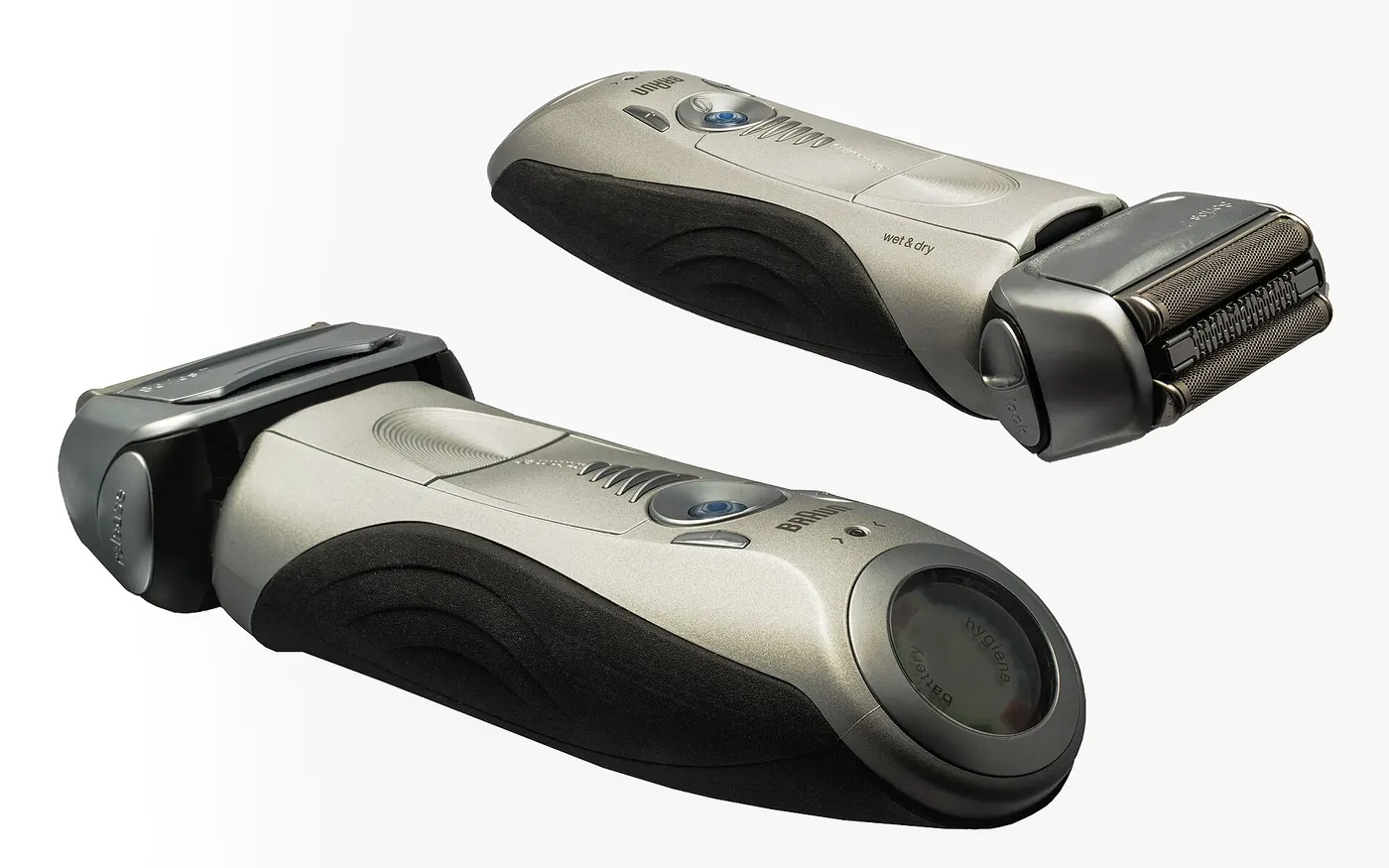
Nobody switches shaving method because of a specification. They switch because the current one leaves stubble under the jaw, or takes 12 minutes they do not have, or has started costing more a month than it should. Those are three different problems and they point at three different answers.
This guide compares rotary, foil and double-edge shaving on the things that actually decide it: beard direction, time per shave, skin response and cost per shave over 5 years. Every price is a worked example; this site tests nothing, ranks nothing and carries no live prices.
Beard direction decides more than brand does
A foil shaver pushes a thin perforated screen flat against the skin and cuts the hairs that stand up through it with an oscillating blade behind. It suits hair that grows in a consistent direction and a face with flat planes, and it is usually the faster of the two electric types on a daily growth.
A rotary shaver uses three or four circular heads that float independently and cut hair that is pulled into slots. Independent floating heads follow a contoured jaw and a neck where hair swirls, which is why people with hair growing in several directions at once tend to end up here. It is generally more forgiving of two or three days of growth and slower on a flat cheek.
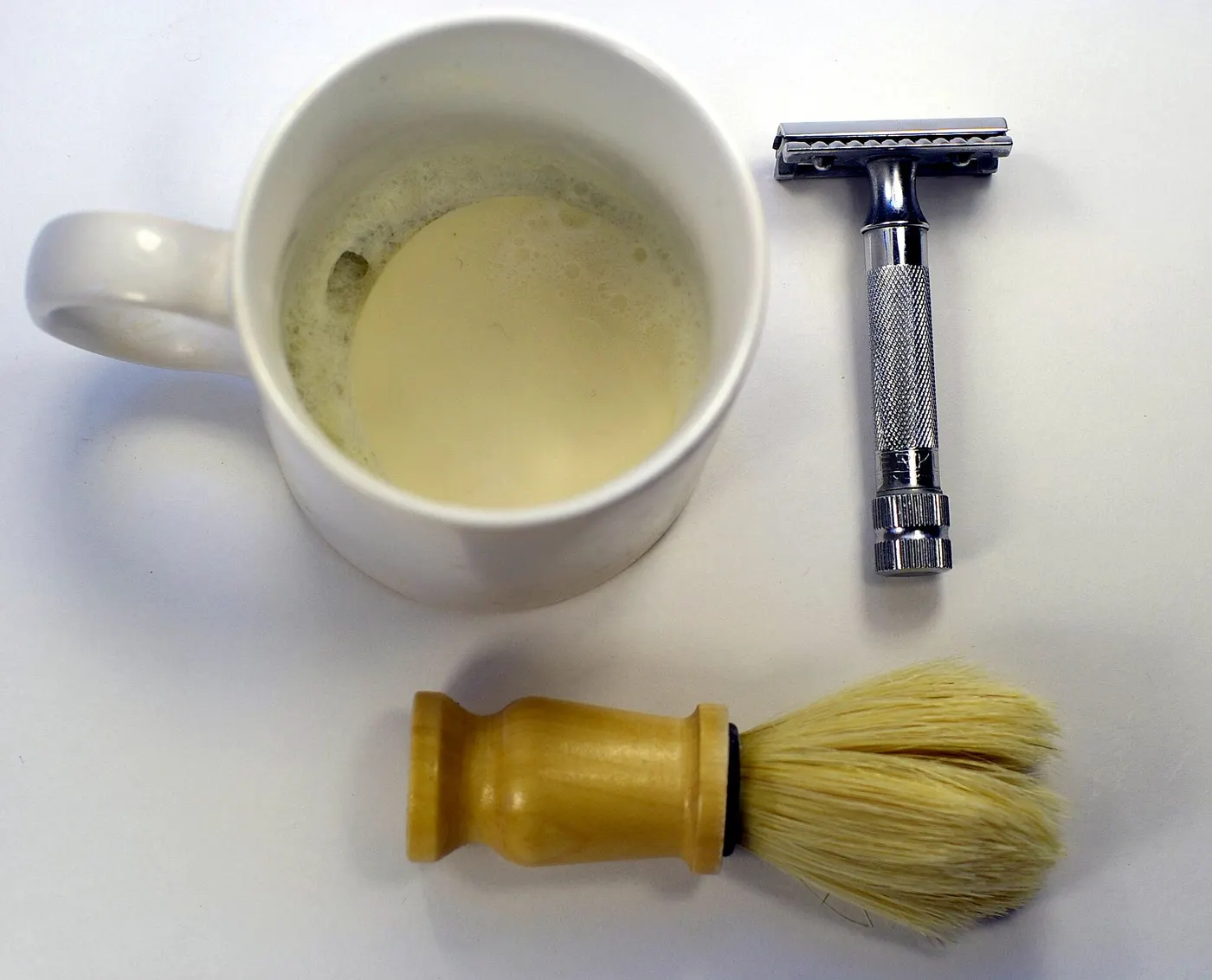
A double-edge safety razor cuts with a single exposed edge at a fixed angle. It has no opinion about hair direction at all, which is its advantage, and no tolerance for a careless angle, which is its cost. It is the only one of the three that needs technique rather than just a routine, and the only one where the skill transfers to any handle you later buy.
| Method | Suits | Struggles with | Typical time per shave |
|---|---|---|---|
| Foil electric | Hair growing in one direction, flat planes | Swirls on the neck, several days of growth | 3 to 5 minutes |
| Rotary electric | Contoured jaw, hair growing several ways | Very short daily stubble on flat cheeks | 4 to 6 minutes |
| Double-edge safety razor | Any hair direction, close results | A hurried morning and a careless angle | 8 to 12 minutes |
Times are the ranges people typically report for a full face once a method is familiar, not measurements we have taken. A first week with a safety razor will be at the long end of its range or beyond it.
The replacement clock is part of the purchase
An electric shaver is a razor that wears out invisibly. Braun's own guidance is that with good cleaning habits and an average shaving frequency it recommends changing the foil and cutter block every 18 months, and that both parts should be changed together because they work as a pair and wear together. A worn pair does not stop cutting; it starts pulling, which is the point at which people blame their skin.
Over 5 years that is 3 replacements, at roughly 18, 36 and 54 months. At $40 a set that is $120 of consumables on top of a $180 shaver, so the shaver costs $300 over the period. Spread across 1,300 shaves — 5 a week for 5 years — that is about 23 cents a shave.
A double-edge razor has the same idea with a much smaller number. A $35 handle and a blade changed every 5 shaves means 260 blades over the same 1,300 shaves, which at 12 cents each is $31.20. The total is $66.20, about 5 cents a shave. The handle is permanent; the blade is the only consumable, and no manufacturer owns its size.
| Method | Up-front | Consumables over 5 years | Total | Cost per shave |
|---|---|---|---|---|
| Foil or rotary electric | $180 | $120 — 3 head sets at $40, every 18 months | $300 | about $0.23 |
| Double-edge safety razor | $35 | $31.20 — 260 blades at $0.12 | $66.20 | about $0.05 |
| Cartridge razor | $12 | $570.50 — 163 cartridges at $3.50 | $582.50 | about $0.45 |
Blades are changed every 5 shaves and cartridges every 8, which are common habits rather than rules. Soap, cream and balm are not in this table; they are costed in the routine section of the irritation guide on this site.
What a trimmer adds, and when it is the whole answer
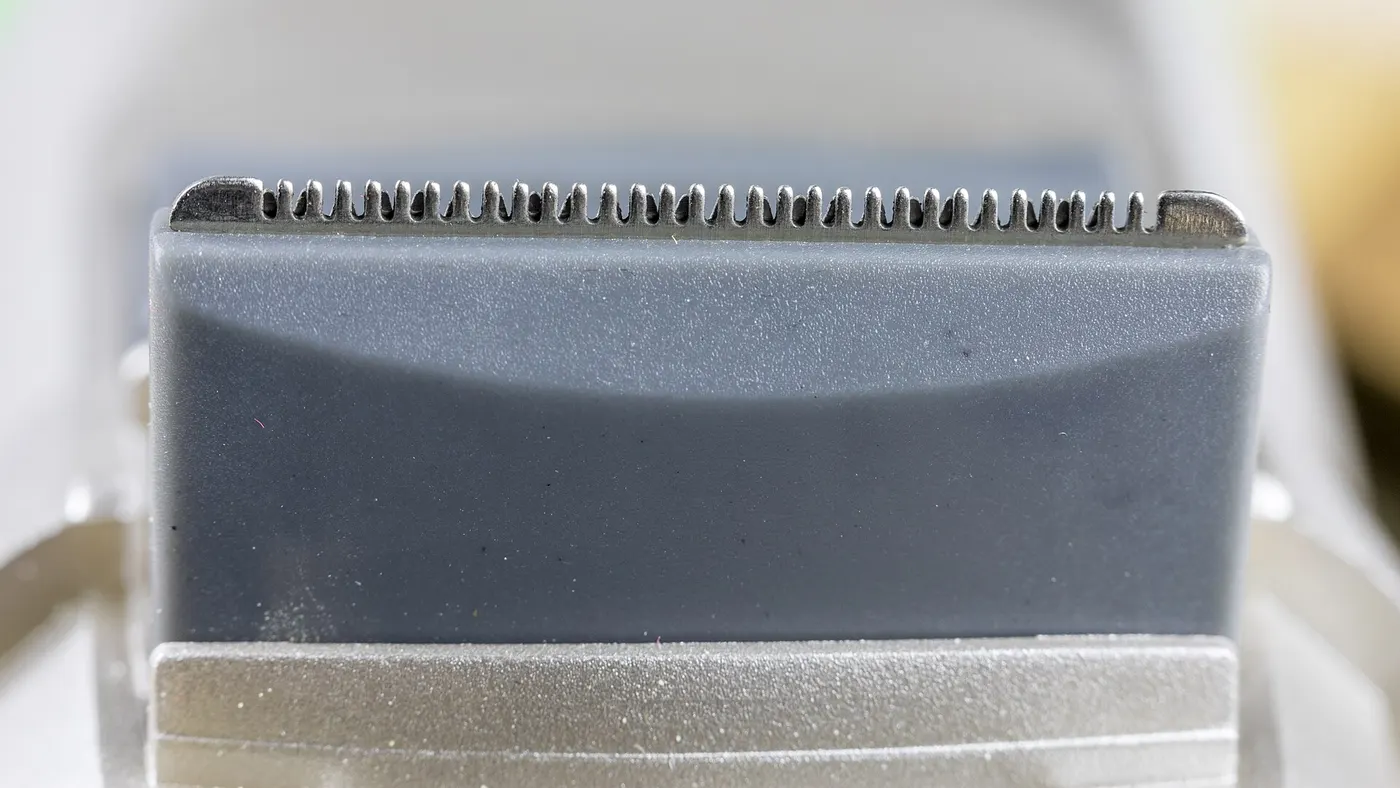
A beard trimmer is not a shaver with guards; it is a different cutting geometry. The blade set is a fixed comb with a moving blade sliding across it, which cuts hair at a set distance from the skin and leaves it there. That is why a trimmer at its shortest setting still leaves visible stubble, and why it is the right tool for anyone whose target is short rather than bare.
For a lot of households the trimmer is the purchase that gets used and the shaver is the one that does not. If your actual routine is a close trim twice a week and a shave before something formal, a $45 trimmer plus a $35 safety razor is a better-matched kit than a $180 electric shaver used daily in theory.
Trimmer blades dull too, but they announce it clearly: the cut becomes uneven and the device starts to pull at longer settings. Oiling the blade set after every few uses is the whole of the maintenance, and it roughly doubles the useful life of a cheap blade set.
- A trimmer leaves hair at a set length; a shaver removes it at the skin
- The shortest trimmer setting still leaves visible stubble by design
- A trimmer plus a safety razor covers most real routines for under $80
- Oil the blade set every few uses; dry metal on metal is what dulls it
- Uneven cutting at long settings is the signal to replace the blade set
Price context, and what the index does not tell you
In the U.S. Bureau of Labor Statistics consumer price index, personal care products rose 2.1% over the 12 months to September 2026, while haircuts and other personal care services rose 3.7%. Products are rising slower than the services they replace, which is the quiet economic argument for owning a trimmer.
What the index cannot tell you is which method you will still be using in a year. That is decided by the morning, not the money: a 10-minute safety-razor shave at 6am does not survive contact with a real schedule for most people, and a 4-minute electric shave does.
The sensible order is therefore schedule first, beard second, price third. The cost-per-use calculator on this site will do the third part with your own numbers in about a minute once the first two are settled.
Before you buy
- Work out how many minutes your actual morning gives you before choosing a method
- Look at which directions your beard grows on the neck, not just the cheek
- Add the head or blade replacements for 5 years to the purchase price before comparing anything
- Diarise the electric shaver's 18-month head replacement at the point of purchase
- Decide whether your real target is short or bare, and buy a trimmer if it is short
- Check whether a shaver is rated for wet use if you intend to use gel or foam
Questions readers ask
- Is an expensive electric shaver closer than a cheap one?
- Within the same type, the differences that matter are the number of cutting elements, how well the head follows a jaw, and whether it is usable wet. A worn head on a $300 shaver cuts worse than a fresh head on a $120 one, which is why the 18-month replacement schedule changes results more than the purchase price does.
- How long does a double-edge blade actually last?
- Between 3 and 7 shaves for most beards, and you will feel the change before you see it. The table above uses 5 shaves a blade, giving 260 blades over 1,300 shaves and $31.20 at 12 cents each. Pushing a blade to 10 shaves saves about $15 over 5 years and costs considerably more than that in skin.
- Can I use an electric shaver in the shower?
- Only if the model is rated for wet use, which the manufacturer states explicitly. Where it is, wet shaving with a gel often suits sensitive skin better than dry, because the gel reduces the drag of the foil across the skin. A dry-only shaver taken into a shower is a warranty question and an electrical one.
- Is a cartridge razor ever the better choice?
- For travel and for anyone who shaves rarely, yes, because the handle is cheap and the technique is forgiving. The economics turn against it with frequency: at 5 shaves a week for 5 years it is about $582 against $66 for a double-edge razor, and that gap is entirely in the cartridges.
Sources
- Braun — replacement shaver heads: change foil and cutter block every 18 months, and change both together — checked 2026-11-03
- U.S. Bureau of Labor Statistics — Consumer Price Index, Table 2, 12-month percent changes to September 2026 (personal care products +2.1%, haircuts and other personal care services +3.7%) — checked 2026-11-03
Some links on this site can earn us a commission. That does not change which product a guide recommends, and it adds nothing to your price. Advertising is not enabled on this site yet. When it is, ads will be labelled and kept visually separate from the guides.